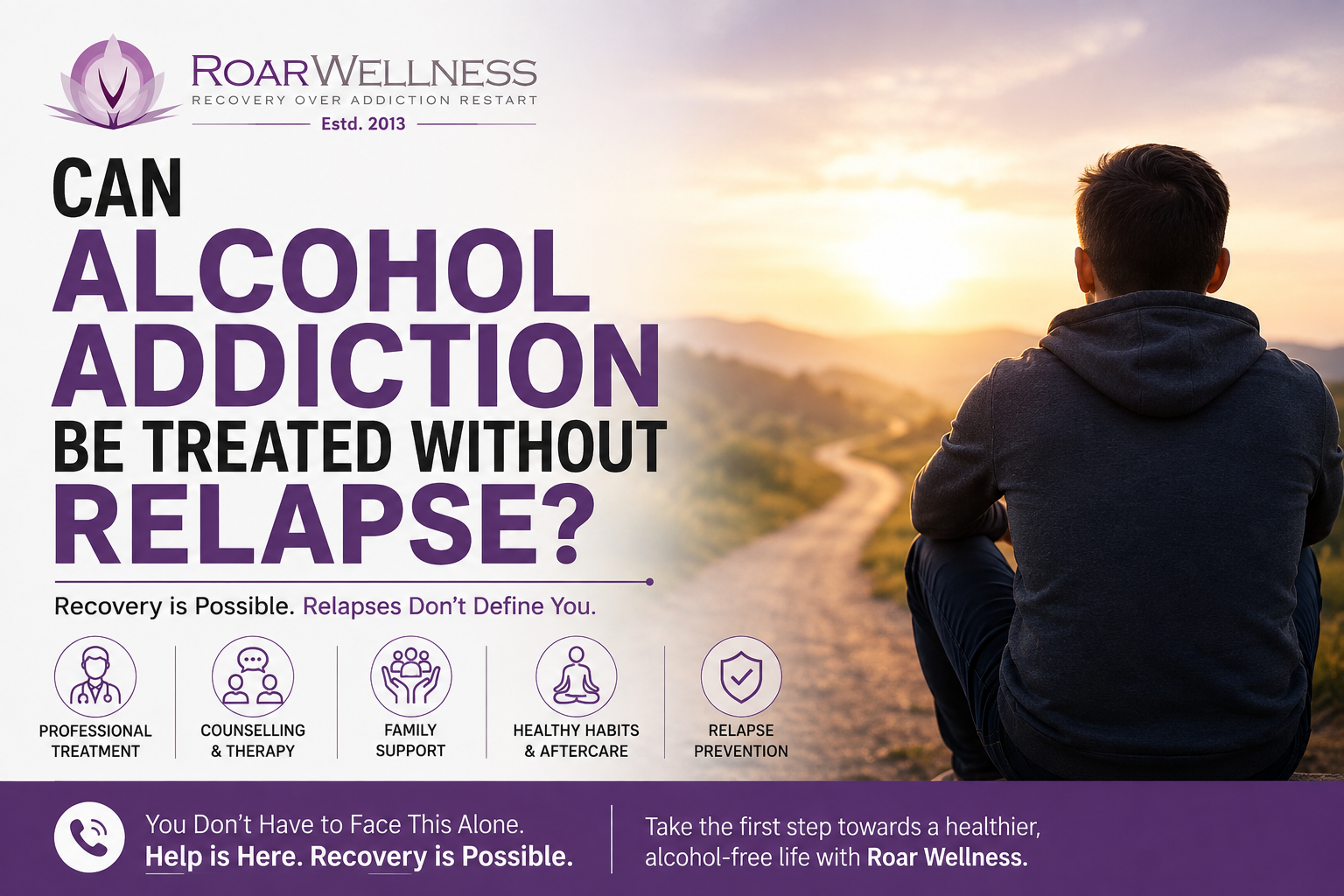
Alcohol addiction can affect a person’s physical health, mental well-being, relationships, work, and everyday life. For individuals struggling with alcohol dependence—and for their families—one of the biggest questions is often: Can alcohol addiction be treated without relapse?
The answer is that long-term recovery is possible, but relapse can happen and does not mean that treatment has failed. Alcohol use disorder (AUD) is a treatable condition, and recovery usually requires more than simply stopping alcohol consumption. Professional treatment, counselling, medical support when required, lifestyle changes, family involvement, and continued aftercare can all play important roles in maintaining recovery.
For someone seeking an alcohol rehabilitation centre in Delhi, understanding how relapse happens and how it can be prevented is an important part of choosing appropriate treatment.
What Is Alcohol Addiction?
Alcohol addiction, clinically referred to as alcohol use disorder (AUD), is a condition in which a person has difficulty controlling their alcohol use despite experiencing negative consequences.
Someone experiencing alcohol addiction may:
- Drink more frequently or in larger quantities than intended
- Find it difficult to stop drinking
- Experience strong cravings for alcohol
- Need increasing amounts of alcohol to achieve the same effect
- Continue drinking despite problems at home or work
- Experience withdrawal symptoms when they stop drinking
- Spend significant time obtaining, consuming, or recovering from alcohol use
- Lose interest in activities they previously enjoyed
Alcohol addiction is not simply a matter of willpower. It can involve changes in brain function, behaviour, emotional health, and physical dependence.
Can Alcohol Addiction Be Completely Treated?
Alcohol addiction can be treated and managed, and many people achieve long-term recovery.
However, recovery should not be viewed as a quick process with a guaranteed outcome. Addiction affects individuals differently, and treatment plans need to be adapted to their specific circumstances.
The goal of treatment may include:
- Stopping or reducing harmful alcohol use
- Managing withdrawal safely
- Understanding the causes and triggers behind drinking
- Developing healthier coping mechanisms
- Addressing co-existing mental health concerns
- Rebuilding relationships and daily routines
- Learning strategies to prevent relapse
- Maintaining long-term recovery
For some people, recovery may involve complete abstinence from alcohol, particularly when continued drinking creates a high risk of returning to problematic use.
Does Relapse Mean Alcohol Treatment Has Failed?
No.
Relapse can occur during recovery, but it does not mean that a person is incapable of recovering or that previous treatment was useless.
Addiction recovery is often a long-term process. A return to drinking may indicate that additional support, treatment adjustments, or stronger relapse-prevention strategies are needed.
Instead of viewing relapse as failure, families and individuals can use it as an opportunity to identify:
- What triggered the return to drinking
- Which warning signs were missed
- Whether treatment needs to be modified
- What emotional or environmental factors contributed
- Whether additional counselling or professional support is needed
Seeking help early after a relapse can prevent the situation from becoming more severe.
What Causes Relapse in Alcohol Addiction?
Relapse can happen for different reasons. Identifying personal triggers is therefore an important part of recovery.
1. Stress and Emotional Pressure
Work-related stress, relationship difficulties, financial problems, grief, or emotional distress can increase the urge to drink.
2. Social Situations
Being around people who drink or attending places where alcohol is readily available can create strong temptation.
3. Cravings
Even after stopping alcohol, some people may experience cravings. Learning how to manage these urges is an important part of recovery.
4. Overconfidence
After a period without alcohol, someone may believe that they can have “just one drink” without returning to previous patterns. For some individuals, this can become a significant relapse risk.
5. Lack of Aftercare
Completing a rehabilitation programme does not necessarily mean that recovery is finished. Without continued support, a person may struggle when faced with everyday triggers.
6. Untreated Mental Health Problems
Depression, anxiety, trauma, and other psychological difficulties can contribute to problematic alcohol use. Addressing these concerns alongside addiction can be important for sustainable recovery.
How Can Relapse Be Prevented?
There is no single strategy that guarantees that relapse will never occur. However, several approaches can reduce risk and help people maintain recovery.
Professional Addiction Treatment
Professional treatment provides structured support and helps individuals understand their drinking patterns, triggers, and recovery goals.
Depending on the individual’s needs, treatment may involve medical care, counselling, behavioural therapies, structured rehabilitation, and continuing support.
Counselling and Behavioural Therapy
Therapy can help individuals identify thoughts, emotions, and behaviours associated with alcohol use.
It can also help them develop healthier ways to manage:
- Stress
- Cravings
- Anger
- Anxiety
- Relationship problems
- Negative emotions
- High-risk situations
Identifying Personal Triggers
A person in recovery can benefit from understanding the situations most likely to trigger drinking.
Triggers may include:
- Certain people
- Specific locations
- Social gatherings
- Emotional distress
- Financial stress
- Relationship conflicts
- Memories associated with drinking
Recognising these triggers makes it easier to develop a plan for handling them.
Building a Healthy Routine
Recovery becomes easier to maintain when a person’s daily life has structure.
A healthy routine may include:
- Regular sleep
- Physical activity
- Nutritious meals
- Meaningful hobbies
- Productive work
- Supportive social relationships
- Stress-management activities
Family Support
Family members can play an important role in recovery.
Support does not mean constantly monitoring or controlling the individual. Instead, families can encourage treatment, maintain healthy boundaries, provide emotional support, and recognise warning signs.
Family counselling can also help relatives understand addiction and communicate more effectively.
Continuing Aftercare
One of the most important aspects of long-term recovery is continued support after completing residential or structured treatment.
Aftercare may include counselling sessions, support groups, follow-up appointments, relapse-prevention planning, and other forms of ongoing support.
What Should You Do If Someone Relapses?
A relapse should be taken seriously, but it should not automatically be treated as a reason for blame or shame.
If someone returns to drinking:
- Encourage them to seek professional help.
- Identify what triggered the relapse.
- Avoid judgement and unnecessary confrontation.
- Reassess their recovery plan.
- Reconnect with counselling or treatment support.
- Strengthen their relapse-prevention strategy.
- Seek urgent medical help if severe withdrawal or other medical complications are present.
A person experiencing significant alcohol dependence should not abruptly stop heavy alcohol use without medical guidance, because alcohol withdrawal can sometimes become medically dangerous.
When Should Someone Consider Alcohol Rehabilitation?
Professional rehabilitation may be appropriate when alcohol use is significantly affecting a person’s health, relationships, work, finances, or ability to function normally.
It may be particularly important to seek professional help when someone:
- Cannot stop drinking independently
- Experiences withdrawal symptoms
- Repeatedly tries to quit but starts drinking again
- Drinks despite serious health or family consequences
- Experiences strong cravings
- Has experienced previous relapses
- Has co-existing mental health concerns
- Needs a structured and supportive recovery environment
A professional assessment can help determine the appropriate level of care.
Can Someone Live a Normal Life After Alcohol Addiction?
Yes. Recovery does not mean that life has to revolve around addiction forever.
With appropriate treatment and ongoing support, people can rebuild relationships, return to work, develop healthier routines, pursue personal goals, and regain control over their lives.
Recovery is different for everyone. Some people may require longer-term support, while others gradually become more independent as they develop effective coping strategies.
The important point is that seeking treatment is not a sign of weakness. It is a step toward improving health and quality of life.
Alcohol Addiction Treatment at Roar Wellness
Roar Wellness focuses on providing structured support for individuals dealing with addiction and related challenges. Treatment can involve a combination of professional guidance, counselling, rehabilitation support, recovery planning, and aftercare based on individual needs.
If alcohol use is affecting you or someone in your family, seeking professional guidance early can make it easier to understand the available treatment options.
Recovery is possible, and relapse does not have to define a person’s future.
Frequently Asked Questions
Can alcohol addiction be treated permanently?
Alcohol addiction can be treated, and many people achieve long-term recovery. However, addiction is a condition that may require ongoing attention and support. There is no universal guarantee that relapse will never occur.
Can someone recover from alcohol addiction without going to rehab?
Some people may recover through outpatient treatment, counselling, medical care, support groups, or other structured approaches. However, people with severe dependence or repeated unsuccessful attempts to stop drinking may require a higher level of professional support.
How can I prevent alcohol relapse?
Identifying triggers, attending counselling, developing healthy routines, maintaining supportive relationships, following an aftercare plan, and seeking help early when warning signs appear can all support relapse prevention.
What are the early signs of alcohol relapse?
Possible warning signs include renewed cravings, romanticising past drinking, returning to drinking environments, withdrawing from support systems, increased stress, changes in mood, and thinking that controlled drinking is possible.
Is alcohol relapse common?
Relapse can occur during recovery, but it is not inevitable. Effective treatment, continued support, trigger management, and an individualised recovery plan can help reduce the risk.
Should someone stop drinking suddenly?
For people who are physically dependent on alcohol, suddenly stopping can cause serious withdrawal complications. Anyone who drinks heavily or experiences withdrawal symptoms should seek professional medical advice before attempting to stop.
The Path to Long-Term Recovery From Alcohol Addiction
Can alcohol addiction be treated without relapse? Long-term recovery is possible, but no responsible treatment provider can promise that relapse will never happen.
The better goal is to build a strong recovery foundation that reduces relapse risk and gives a person the tools and support needed to respond quickly if difficulties arise.
Professional treatment, counselling, family involvement, healthy routines, trigger management, and aftercare can all contribute to sustainable recovery.
If you or someone you care about is struggling with alcohol addiction, reaching out for professional support can be the first step toward recovery.